Choosing a Foldable Wheelchair Without Overthinking It
When people search for a foldable wheelchair, they’re usually not browsing casually.
They’re trying to solve a very practical problem.
That was the case for us.
We needed a manual wheelchair that could be used every day, mostly indoors, sometimes outside, and occasionally folded and put into a car. Nothing fancy. No electronics. Just something that wouldn’t feel like a burden to use.
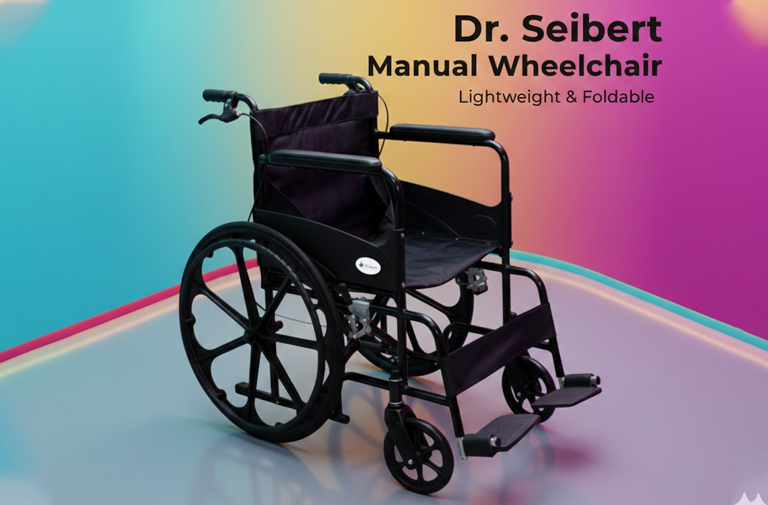
After spending too much time comparing wheelchair price in India, materials, and reviews that all sounded the same, we settled on the Dr. Seibert lightweight & foldable manual wheelchair.
I’ve been using it regularly now. Enough to notice what works, what doesn’t, and what actually matters once the novelty wears off.
This isn’t praise. It’s just what living with it feels like.
The First Thing You Notice: It Doesn’t Feel Heavy
The first time I lifted it, that’s what stood out.
Not “wow, this is ultra-light”, but more like, okay, this isn’t going to be annoying every single time.
For a folding wheelchair, that matters.
The metal alloy frame feels solid, but it doesn’t have that dead, bulky weight some cheaper wheelchairs have. When folded, it’s manageable enough to lift into a car boot without needing a second person every time.
That alone already puts it ahead of a lot of options in the same wheelchair cost range.
Folding It Is Simple — And That’s Important
Some folding wheelchairs technically fold… but you still hesitate before doing it because the mechanism feels awkward or stiff.
This one folds in a straightforward way. No forcing. No guessing where to pull. After a few tries, it becomes muscle memory.
That matters more than you think, especially if:
- You’re folding it multiple times a week
- A caregiver is doing it
- You’re in a hurry or tired
The footrest also folds in without getting in the way, which sounds minor until you’ve dealt with one that keeps bumping into things.
Seating Comfort Over Time (Not Just the First 10 Minutes)
Short sitting is easy. Long sitting tells the truth.
The seat is wide enough for an adult without feeling cramped, and the padding does its job. The waterproof armrests are actually useful — easy to wipe, don’t absorb sweat, and don’t start smelling after a few weeks.
One realistic moment I remember:
Sitting through a long hospital wait, almost two hours, shifting weight occasionally. No sharp pressure points. No immediate discomfort. That’s about as much as you can reasonably ask from a manual wheelchair in this price range.
Is it luxurious? No.
Is it usable for daily sitting? Yes.
Mag Wheels Make a Bigger Difference Than Expected
I didn’t think much about mag wheels before using them.
But after rolling over uneven tiles, slightly broken pavement, and rough indoor flooring, I noticed the difference. The wheelchair moves smoothly, without that constant rattling feeling you get from traditional spoke wheels.
They feel lighter when pushing and easier to control.
Not effortless — it’s still a manual wheelchair — but less tiring over time.
If you’re comparing a folding wheelchair with regular wheels vs mag wheels, this is one of those details that quietly improves everyday use.
Turning Indoors Is Easy (Thanks to the 360° Castors)
This is where the wheelchair surprised me a bit.
Indoor turning is smooth. The front wheels rotate fully, so navigating narrow corridors, doorways, and rooms doesn’t feel like a constant three-point turn.
If you live in a typical Indian home where space isn’t generous, this matters.
I’ve used wheelchairs before where indoor movement felt more difficult than outdoors. That’s not the case here.
Footrest Positioning Actually Feels Thoughtful
The footrest stays level, and your legs rest naturally instead of hanging or being forced into an awkward angle.
That might sound obvious. It isn’t.
On cheaper models, the footrest feels like an afterthought. Here, it feels balanced. Over longer sitting periods, that reduces strain on the knees and lower legs.
Where It Falls Slightly Short (Because Nothing Is Perfect)
There are a couple of things worth mentioning honestly.
- The cushioning is good, but if someone needs medical-grade pressure relief for very long sitting sessions, you might still want an additional seat cushion.
- This is not meant for rough outdoor terrain. It handles normal outdoor use fine, but broken roads or gravel will still feel uncomfortable.
- There’s no advanced adjustability. It’s a universal size, which works for most adults, but very tall or very heavy users should double-check suitability.
None of these are deal-breakers. They’re just realities of a lightweight manual wheelchair at this price.
Price vs Reality in India
Wheelchair prices in India vary wildly.
You’ll find cheaper ones that look similar online, but the difference shows up after a few weeks: stiffness, rust, noisy wheels, uncomfortable seating.
At around ₹5,500, this sits in a practical middle ground.
Not cheap enough to feel disposable.
Not expensive enough to feel risky.
For the build quality, folding ease, and daily comfort, the wheelchair cost feels fair.
Who This Wheelchair Actually Makes Sense For
From real use, I’d say this is suitable if:
- You need a manual wheelchair for daily use
- Folding and transport matter
- Indoor movement is a priority
- You want something reliable, not flashy
It’s not meant to impress anyone.
It’s meant to be used.
And that’s exactly what it does.
One Small, Honest Moment
There was a day when we folded it quickly, put it into the car, and forgot about it until evening.
When we took it out again, unfolded it, and used it immediately — nothing was loose, nothing creaked, nothing felt off.
That’s when you stop thinking about the wheelchair itself.
And that, strangely, is probably the best compliment.
Final Thoughts, Without Selling It
If someone asked me, “Is the Dr. Seibert foldable wheelchair worth it?”
I wouldn’t hype it.
I’d say:
It’s practical.
It’s comfortable enough.
It folds easily.
It does what it’s supposed to do, every day.
And in this category, that’s more valuable than big promises.