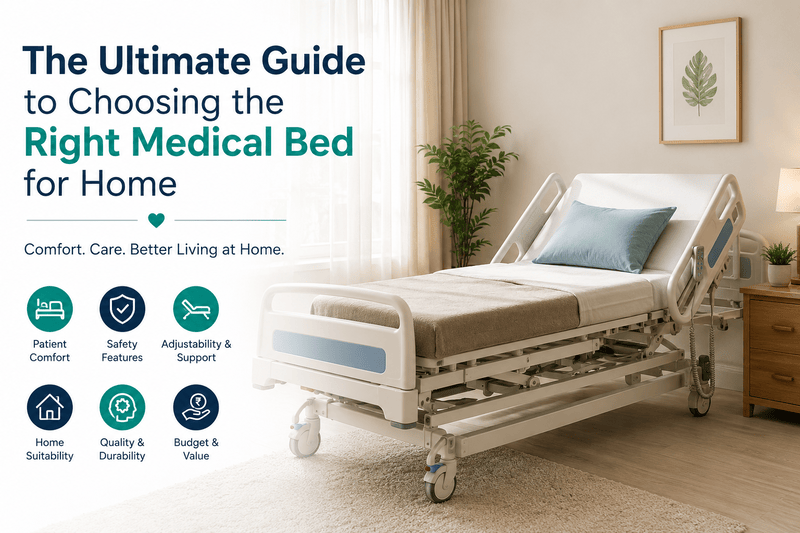
When a loved one requires extended bed rest, post-surgical recovery, or long-term elderly care, the home environment must quickly adapt to become a safe, healing sanctuary. At the center of this transition is the medical bed for home.
Gone are the days when hospital equipment looked cold, clinical, and out of place in a residential setting. Today’s modern hospital bed for home use is engineered to blend therapeutic functionality with home comfort. Whether you are managing a chronic condition, caring for an aging parent, or recovering from a major orthopedic surgery, investing in the right patient bed for home can drastically improve the quality of life for both the patient and the caregiver.
In this comprehensive guide, we will explore everything you need to know about medical beds, from understanding the different types of bed in medical care to deciding whether buying or renting is the best financial choice for your family.
What is a Medical Bed for Home and Who Needs One?
A medical bed for home is a specialized, adjustable bed designed to meet the therapeutic, safety, and ergonomic needs of individuals requiring assisted care outside of a clinical facility. Unlike a standard residential bed, which offers a fixed, flat surface, a patient bed for home allows for precise adjustments to the head, foot, and overall height of the frame.
But who exactly needs a hospital bed for home? The decision is usually driven by specific medical or mobility challenges:
- Post-Surgical Recovery: Patients recovering from hip replacements, spinal surgeries, or major abdominal procedures require precise elevation to minimize pain, reduce swelling, and promote healing.
- Chronic Respiratory or Cardiac Issues: Conditions like COPD, congestive heart failure, or severe sleep apnea often require the patient to sleep in an elevated, semi-upright position to breathe comfortably.
- Limited Mobility & Elderly Care: Individuals with arthritis, Parkinson’s disease, or general age-related weakness struggle to get in and out of a low, standard bed. An elderly medical bed can be raised to a comfortable standing height.
- High Risk of Pressure Ulcers: Bedridden patients are at a severe risk of developing bedsores. Medical beds accommodate specialized pressure-relieving mattresses and allow for frequent, easy repositioning.
- Caregiver Protection: Family caregivers are at a high risk of chronic back injuries. A bed that adjusts to the caregiver’s waist height eliminates the need to bend over excessively during daily care routines like bathing, feeding, or wound dressing.
Medical Bed vs. Normal Bed: Why the Upgrade is Essential
Many families initially try to make a standard bedroom setup work, using extra pillows or wedge cushions to elevate the patient. However, pillows slip, cause spinal misalignment, and offer zero safety benefits. Upgrading to a dedicated medical bed for home provides distinct, clinically proven advantages:
| Feature | Normal Residential Bed | Medical Bed for Home |
|---|---|---|
| Adjustability | Fixed, flat surface. Pillows slip and cause misalignment. | Precise, secure motorized or manual adjustment of head, foot, and height. |
| Safety | No built-in fall prevention. High risk of injury during transfers. | Integrated, removable safety side rails and adjustable hi-low height. |
| Caregiver Ergonomics | Forces caregivers to bend at the waist, leading to chronic back pain. | Raises to waist level, allowing caregivers to provide care with proper body mechanics. |
| Mattress Compatibility | Designed for standard spring or foam mattresses. | Compatible with therapeutic, pressure-relieving, and alternating-pressure medical mattresses. |
| Mobility | Heavy and difficult to move for cleaning or room reconfiguration. | Equipped with lockable caster wheels for easy, safe repositioning. |
Ultimately, a normal bed is designed for sleep, while a hospital bed for home is designed for care, recovery, and safety.
Types of Medical Beds Available for Home Care
Understanding the different types of bed in medical and home care settings is crucial for making an informed purchase. The right choice depends on the patient’s medical requirements, mobility level, and the amount of caregiver involvement. Here are the primary categories available at Alchemy Homecare:
1. Single-Function Manual Beds
Single-function beds are the most basic and economical option. They typically allow for the adjustment of the head section (backrest) only, operated via a smooth hand crank. We offer the standard Single Function Manual Bed for foundational care, as well as the upgraded Single Function Manual Bed with ABS Rail for enhanced safety and easier sanitization.
- Best for: Patients who primarily need help sitting up for eating, reading, or breathing relief, but do not require leg elevation.
- Ideal use case: Budget-conscious families, temporary care situations, or patients with mild mobility issues.
2. Double-Function Manual Beds
Double-function medical beds provide additional adjustment options, allowing both the head and foot sections to be raised or lowered independently via hand cranks. You can choose our reliable Double Function Manual Bed or opt for the Double Function Manual Bed with ABS Rail for a more modern, hygienic design.
- Best for: Patients who need to elevate their legs to reduce swelling (edema) or improve circulation, while simultaneously keeping the head elevated.
- Ideal use case: Post-operative care, chronic pain management, and enhanced comfort for long-term bed rest.
3. Single-Function Electric Beds
For patients who desire independence but only need backrest adjustment, the Single Function Electric Bed with Aluminium Rail is an excellent choice. It combines the convenience of push-button motorized adjustment with a lightweight, rust-proof safety frame.
4. Three-Function Electric & Manual Beds
These versatile beds offer the best of both worlds. They feature motorized adjustments for the head, leg, and foot sections, but rely on a manual crank for the overall height (Hi-Low) adjustment to keep costs manageable. Explore our Three Function Electric & Manual Bed with Mattress (a complete all-in-one package) or the Three Function Electric Bed with ABS Rail for premium safety.
- Best for: Patients who need frequent position changes for pressure relief but want to keep costs lower than a full-electric model.
- Ideal use case: Comprehensive home nursing, stroke recovery, and patients requiring frequent position changes.
5. Five-Function Electric Hospital Beds
The pinnacle of home care technology, the Five Function Electric Hospital Bed with ABS Rail allows precise, motorized control over the head, leg, overall height, and even Trendelenburg/reverse-Trendelenburg tilting.
- Best for: Patients requiring advanced, critical-care positioning at home.
- Ideal use case: Long-term bedridden patients, severe cardiac/respiratory conditions, and households seeking a premium, zero-effort care solution.
Key Features and Accessories to Look For
When shopping for medical beds, do not compromise on safety and durability. Use this checklist to evaluate your options:
- ABS Side Rails: We highly recommend beds equipped with ABS (Acrylonitrile Butadiene Styrene) side rails. Unlike traditional metal rails, ABS is lightweight, highly durable, corrosion-resistant, and incredibly easy to wipe down and sanitize.
- Hi-Low Height Range: The bed should lower close to the floor (to minimize injury risk if a patient rolls out) and raise high enough (e.g., 39cm to 69cm) for easy, ergonomic caregiver access.
- Weight Capacity: Ensure the frame can comfortably support the patient’s weight. Heavy-duty models support 150 Kg or more, providing a sturdy, wobble-free experience.
- Essential Accessories: A medical bed is only as good as its setup. Pair your bed with a specialized medical mattress and an Imported Over Bed Table to provide a stable, height-adjustable surface for meals, reading, or medical supplies, significantly enhancing the patient’s daily quality of life.
- Power Backup & Manual Override: For electric models, ensure the system has a manual override or drop-down feature in case of power outages, ensuring the patient is never stuck in an uncomfortable position.
Buying vs. Renting a Medical Bed: Which is Right for You?
A very common question we receive at Alchemy Homecare is whether it is better to rent or buy a hospital bed for home. The answer depends entirely on the duration of care needed and your financial preferences.
When to Rent a Medical Bed
If the need is temporary—such as post-surgery recovery, a fractured hip, or a short-term illness—renting is the most cost-effective solution. At Alchemy Homecare, we offer flexible, sanitized, and professionally maintained medical bed rental plans:
- Short-Term Basic Care: Our Medical Bed Rental (One Month – Single Function) starts at just ₹4,500 per month, perfect for basic head elevation needs.
- Enhanced Recovery: Our Medical Bed Rental (Double Function for One Month) is available for ₹6,500 per month, offering both head and leg elevation for superior circulation support.
Benefits of Renting: Zero large upfront capital expenditure, includes delivery and setup, and allows you to trial a bed before committing to a purchase.
When to Buy a Medical Bed
If the patient has a chronic, progressive, or permanent condition (such as advanced Parkinson’s, paralysis, or long-term elderly care), purchasing a medical bed for home is far more economical in the long run.
Benefits of Buying: Guaranteed hygiene (the bed is exclusively yours), no monthly recurring costs, and the bed retains resale value if needs change in the future. High-quality electric and manual beds are built to last for many years.
How to Choose the Best Elderly Medical Bed for Your Loved One
Selecting the right elderly medical bed requires a thoughtful assessment of both the patient’s and the caregiver’s needs. Follow these steps to make the best choice:
Step 1: Consult a Healthcare Professional
Always discuss the need for a medical bed for home with the patient’s doctor or physical therapist. They can provide specific recommendations regarding positioning (e.g., leg elevation for edema or head elevation for COPD).
Step 2: Evaluate the Patient’s Mobility
If the patient has some upper body strength and cognitive ability, a full-electric bed with a simple handheld remote is ideal, as it empowers them to adjust their own position. If the patient is completely dependent on care, focus on hi-low functionality to assist the caregiver with safe transfers.
Step 3: Consider the Caregiver’s Physical Health
If the primary caregiver has a history of back problems, prioritize a full-electric hi-low bed or a 3-function hybrid. The ability to raise the bed to waist level during bathing, dressing, or wound care is a game-changer for caregiver longevity.
Step 4: Measure the Room
Medical beds are larger than standard twin beds. Measure the bedroom to ensure there is at least 3 feet of clearance on all sides. This space is critical for caregivers to move safely and for accommodating wheelchairs or bedside commodes.
Frequently Asked Questions (FAQ)
Does Medicare or health insurance cover a medical bed for home?
Coverage varies by provider and region. In many cases, if a doctor provides a “Letter of Medical Necessity” stating that a hospital bed for home is required to treat a specific condition, a portion of the cost may be reimbursed. Always verify coverage with your specific health insurance provider.
What is the difference between a manual and an electric medical bed?
A manual bed uses hand cranks to adjust the head, foot, or height. It is highly reliable, budget-friendly, and unaffected by power outages, but requires physical effort from the caregiver. An electric bed uses a quiet motor and a handheld remote, offering independence to the patient and zero physical strain on the caregiver.
Are the side rails on medical beds safe?
Yes. Our medical beds feature securely locking side rails (available in durable ABS or Aluminium). They are designed to prevent falls while still allowing the patient or caregiver to easily lower them when getting in or out of bed safely.
Can I use my regular home mattress on a medical bed?
It is strongly discouraged. Standard mattresses do not fit the dimensions of a medical bed frame properly, creating dangerous gaps between the mattress and the side rails (an entrapment hazard). Always use a medically approved mattress designed for pressure redistribution and proper fit.
How do I clean and maintain a home hospital bed?
Regular maintenance ensures longevity. Wipe down the frame, ABS rails, and remote control weekly with a mild, hospital-grade disinfectant. Avoid abrasive chemicals that can damage the powder-coated finish. Check all bolts and motor connections monthly to ensure they remain tight.
Prioritize Comfort and Safety with Alchemy Homecare
Choosing the right medical bed for home is a profound step toward improving the quality of life for both the patient and the caregiver. It transforms a standard bedroom into a safe, supportive, and healing environment.
At Alchemy Homecare, we are committed to providing you with expert guidance, premium products, and compassionate support every step of the way. Whether you need a budget-friendly single-function manual bed, a premium 5-function electric medical recliner bed, or a flexible monthly rental starting at just ₹4,500, we have the perfect solution for your unique needs.
Ready to upgrade your home care setup?
Explore Our Full Collection of Medical Beds for Home Here