We’ve all been there. You’re three hours into a workday, or maybe halfway through a long drive, when that familiar dull ache starts to build in your lower back. You shift in your seat, stretch, and try to ignore it—but by the time you stand up, your spine feels stiff, your muscles are tight, and your energy is drained.
If this sounds like your daily reality, you’re not alone. According to the Global Burden of Disease study, lower back pain is the leading cause of disability worldwide, affecting nearly 600 million people. For modern professionals, drivers, and students, the culprit is rarely a single injury. It’s something far more insidious: prolonged static sitting.
But here’s the good news: You don’t need a $1,000 ergonomic chair or a prescription to find relief. The solution might be simpler, more affordable, and more effective than you think. Enter the orthopedic lumbar cushion.
In this comprehensive guide, we’ll dive deep into the science of spinal health, explore exactly how an orthopedic lumbar cushion works to relieve pain and correct posture, and help you choose the perfect support system for your lifestyle. Whether you’re battling sciatica, slouching at a desk, or enduring long commutes, this guide is your roadmap to pain-free sitting.
💡 Key Insight
An orthopedic lumbar cushion isn’t just a comfort accessory—it’s a preventive health tool. By maintaining your spine’s natural “S” curve, it reduces disc pressure by up to 40%, deactivates painful muscle trigger points, and trains your body to sit correctly even when you’re not using it.
Part 1: The Hidden Cost of Sitting (And Why Your Chair Isn’t Enough)
To understand why a lumbar cushion is necessary, we first need to understand what happens to your body when you sit.
The Biomechanics of Slouching
Your spine is designed to move. It has three natural curves: cervical (neck), thoracic (mid-back), and lumbar (lower back). These curves act as shock absorbers, distributing weight evenly across your vertebrae and discs.
When you sit upright with proper support, your lumbar spine maintains its inward curve (lordosis). However, most standard chairs—whether in offices, cars, or homes—are flat or slightly curved outward. When you lean back against a flat surface, your lower back flattens or rounds forward (kyphosis).
This seemingly small change triggers a chain reaction:
- Disc Pressure Spikes: The front of your spinal discs compresses, while the back stretches. Over time, this uneven pressure can lead to bulging or herniated discs.
- Muscle Strain: Your erector spinae muscles (the ones running along your spine) must work overtime to hold you up against gravity. This leads to fatigue, spasms, and chronic tension.
- Ligament Stress: The ligaments supporting your spine become overstretched, causing inflammation and instability.
- Nerve Compression: As the spine misaligns, it can pinch nerves like the sciatic nerve, sending pain radiating down your legs.
Why “Ergonomic” Chairs Often Fail
You might be thinking, “But I have an ergonomic chair!” While high-end chairs offer adjustability, they often fail for two reasons:
- One Size Doesn’t Fit All: Most chairs are designed for the “average” male body type. If you’re shorter, taller, or have a different pelvic tilt, the built-in lumbar support may hit the wrong spot—or miss entirely.
- Static Design: Even the best chair can’t adapt to your micro-movements throughout the day. An add-on orthopedic lumbar cushion provides dynamic, adaptive support that moves with you.
Part 2: 7 Science-Backed Ways an Orthopedic Lumbar Cushion Transforms Your Health
Now that we know the problem, let’s look at the solution. Here are seven proven ways a high-quality orthopedic lumbar cushion improves your physical well-being.
1. Restores Natural Lumbar Lordosis
The primary function of an orthopedic cushion is anatomical correction. By filling the gap between your lower back and the chair, it gently pushes your lumbar spine forward into its natural inward curve. This alignment restores the spine’s shock-absorbing capability, reducing the load on individual vertebrae. Clinical studies suggest that maintaining lordosis can reduce intradiscal pressure by 30-40% compared to slouched sitting.
2. Deactivates Painful Trigger Points
Chronic slouching creates “knots” in your back muscles known as trigger points. These are hyperirritable spots in skeletal muscle that are associated with palpable nodules in taut bands. An orthopedic lumbar cushion provides consistent, gentle pressure that helps relax these taut bands, improving blood flow and flushing out metabolic waste products like lactic acid that contribute to pain.
3. Reduces Sciatic Nerve Irritation
Sciatica—the sharp, shooting pain that runs from your lower back down your leg—is often caused by poor posture compressing the sciatic nerve root. By aligning the pelvis and spine, a lumbar cushion opens up the intervertebral foramina (the holes where nerves exit the spine), giving the nerve more space and reducing irritation. Many users report significant relief from sciatic symptoms within days of consistent use.
4. Improves Circulation and Reduces Fatigue
Slouching compresses your abdomen and restricts blood flow to your lower extremities. This can lead to swelling in the ankles, varicose veins, and that heavy, tired feeling after a long day. Proper lumbar support opens up your torso, allowing for better diaphragmatic breathing and improved circulation. The result? More energy, less swelling, and greater endurance during long tasks.
5. Enhances Productivity and Focus
Pain is a distraction. When your brain is processing discomfort signals from your back, it has fewer resources for focus, creativity, and decision-making. By eliminating the background noise of physical discomfort, an orthopedic lumbar cushion allows you to enter a state of “flow” more easily. Studies on workplace ergonomics show that employees with proper support report higher job satisfaction and fewer errors.
6. Builds Long-Term Posture Memory
Think of your lumbar cushion as a tactile reminder. Every time you lean back, the cushion provides feedback, gently guiding you into the correct position. Over weeks and months, this retrains your neuromuscular system. Eventually, your body begins to default to this healthier posture even when you’re not using the cushion—a phenomenon known as proprioceptive re-education.
7. Versatility Across Environments
Unlike a fixed chair, a portable orthopedic lumbar cushion goes wherever you go. It transforms any seat—from a rigid airplane bench to a soft sofa—into an ergonomic support zone. This consistency is crucial because posture damage accumulates across all environments, not just at work.
Part 3: What Makes a Cushion “Orthopedic”? (Key Features to Look For)
Not all back pillows are created equal. A generic throw pillow might feel soft, but it won’t provide the structural support needed for spinal health. Here’s what separates a true orthopedic lumbar cushion from the rest.
1. High-Density Memory Foam vs. Polyester Fill
Memory Foam: This is the gold standard. High-density viscoelastic foam responds to body heat and weight, contouring precisely to your unique shape. It provides firm support where needed (the lumbar curve) and softer cushioning elsewhere. Crucially, it retains its shape over time, unlike cheap polyester fills that flatten after a few weeks.
Polyester/Fiberfill: Avoid these. They lack structural integrity, compress quickly, and offer no real ergonomic benefit. They’re comfortable for napping, but useless for posture correction.
2. Ergonomic Contour Design
A flat square pillow cannot support the complex curve of the human spine. Look for a cushion with a wedge or curved profile that mimics the natural lumbar lordosis. Some advanced designs, like the AccuSure model, feature a dual-curve design that supports both the lower back and the mid-thoracic region for comprehensive alignment.
3. Breathable, Moisture-Wicking Cover
Sitting generates heat. Without airflow, you’ll end up sweaty and uncomfortable, which discourages consistent use. Premium cushions use 3D mesh or breathable cotton blends that wick moisture away from the skin. Ensure the cover is removable and machine-washable for hygiene.
4. Secure, Adjustable Straps
A cushion that slides down every time you stand up is useless. Look for dual elastic straps with strong buckles or clips that wrap securely around the chair backrest. Non-slip backing on the rear of the cushion adds an extra layer of stability.
5. Portability and Weight
If you plan to use it in your car or take it to the office, weight matters. A good orthopedic cushion should be lightweight (under 1kg) yet dense enough to provide support. Compact designs that can be rolled or compressed are ideal for travel.
Part 4: Who Needs an Orthopedic Lumbar Cushion?
While anyone who sits can benefit, certain groups will see dramatic improvements:
- Office Workers & Remote Professionals: Combat the “desk slump” and reduce afternoon fatigue.
- Long-Haul Drivers & Commuters: Reduce vibration-induced spinal compression and stay alert longer.
- Gamers: Maintain focus during marathon sessions without back strain.
- Students: Improve concentration during lectures and study sessions.
- Seniors: Provide gentle support for aging spines and reduce stiffness.
- Pregnant Individuals: Alleviate the added lower back pressure caused by shifting center of gravity.
- Post-Surgery/Recovery Patients: *Consult your doctor first*, but many find lumbar supports helpful during rehabilitation.
Part 5: How to Use Your Lumbar Cushion Correctly
Even the best cushion won’t work if used incorrectly. Follow these steps for maximum benefit:
- Positioning: Place the cushion so the thickest part aligns with your belt line (roughly L3-L4 vertebrae). It should fill the gap between your back and the chair, not push you too far forward.
- Seat Depth: Sit all the way back in your chair. Your knees should be at a 90-degree angle, feet flat on the floor. If your feet dangle, use a footrest.
- Strap Adjustment: Tighten the straps so the cushion stays firmly in place, but doesn’t distort the foam shape.
- Break-In Period: Give yourself 3-5 days to adjust. Your body is used to slouching, so proper alignment might feel “weird” at first. Stick with it—your muscles will adapt.
Part 6: Choosing the Right Cushion: The AccuSure Advantage
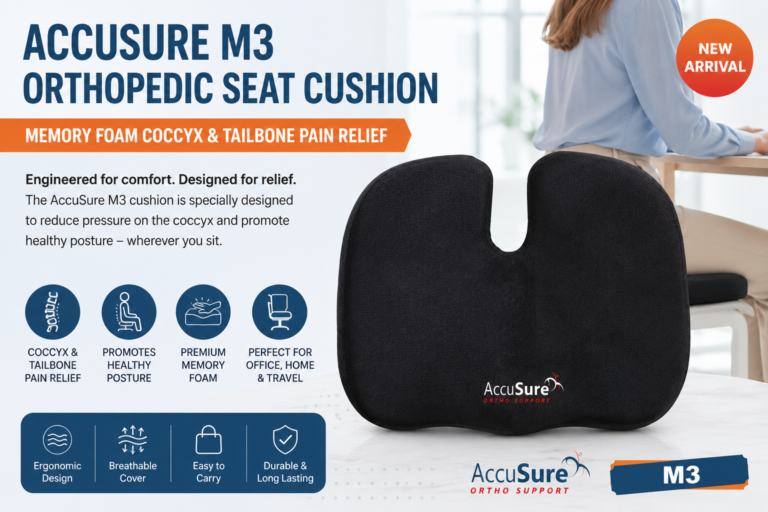
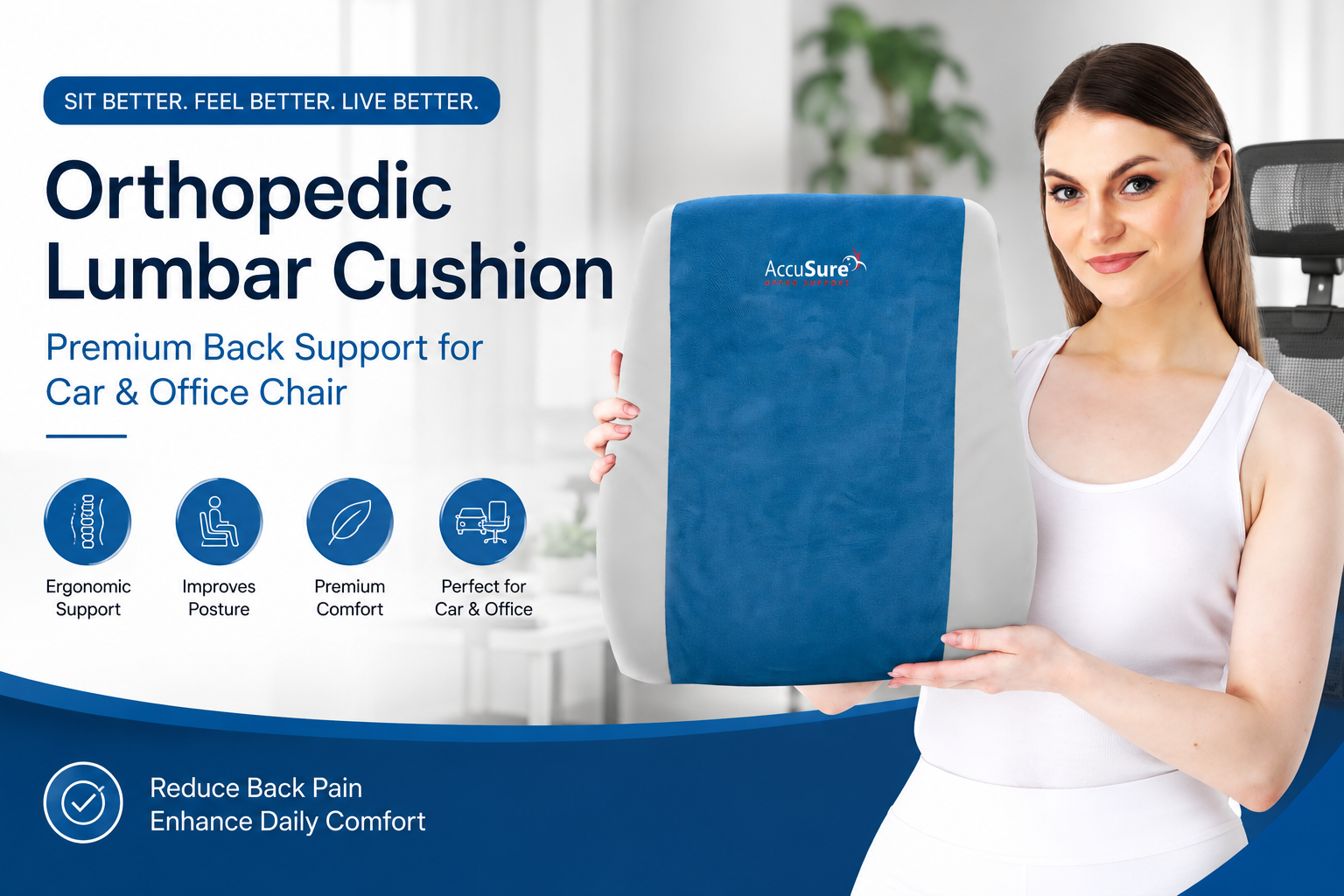
With so many options on the market, how do you choose? At Alchemy Home Care, we recommend the AccuSure Orthopedic Lumbar Cushion for its balance of clinical design and everyday practicality.
Here’s why AccuSure stands out:
- Premium Memory Foam Core: High-density foam that contours instantly without flattening.
- Ergonomic Dual-Curve Design: Supports both lumbar and thoracic regions for full-spine alignment.
- Breathable 3D Mesh Cover: Keeps you cool and dry, even during long drives.
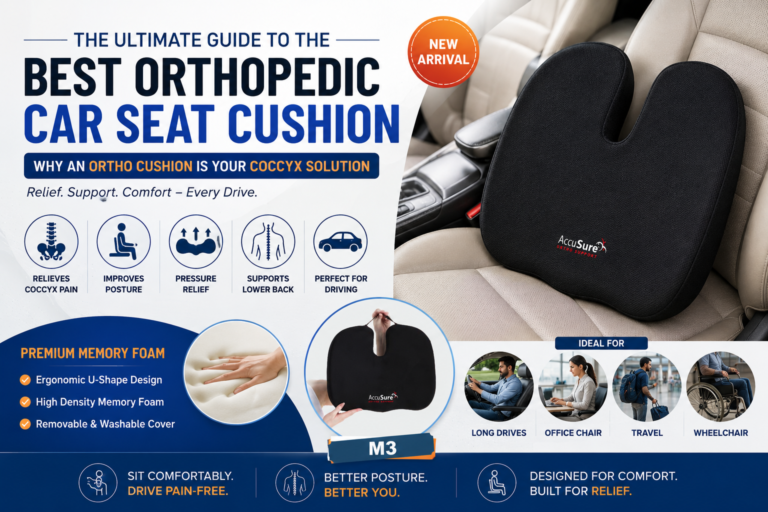
- Universal Fit: Adjustable straps fit office chairs, car seats, wheelchairs, and gaming rigs.
- Easy Care: Removable, machine-washable cover for long-term hygiene.
Whether you’re looking for a car back rest to ease commute pain or a chair support to boost office productivity, AccuSure delivers reliable, lasting comfort.
Frequently Asked Questions (FAQ)
How long does it take to feel relief?
Many users experience immediate comfort due to the pressure-relieving properties of memory foam. However, structural posture correction and muscle relaxation typically take 1-2 weeks of consistent use. Think of it like exercise: consistency yields results.
Can I use this if I have a herniated disc?
Many individuals with herniated discs find significant relief with lumbar support, as it reduces pressure on the affected area. However, every case is unique. We strongly recommend consulting your healthcare provider or physiotherapist before use to ensure it’s appropriate for your specific condition.
Will it fit my car seat?
Yes. The AccuSure cushion features adjustable elastic straps designed to secure to most standard bucket seats, bench seats, and high-back chairs. It’s particularly effective in vehicles where built-in lumbar support is missing or inadequate.
Is memory foam safe for hot climates?
Traditional memory foam can retain heat, but the AccuSure cushion uses a breathable 3D mesh cover that promotes airflow. This significantly reduces heat buildup, making it comfortable even in warmer environments.
How do I clean it?
Spot-clean the foam core with a damp cloth and mild soap. Do not submerge the foam in water. The outer cover is zippered and machine-washable on a gentle cycle with cold water. Tumble dry on low or air dry.
Conclusion: Invest in Your Spine Today
Your spine carries you through every moment of your life. Yet, we often neglect it until pain forces us to pay attention. An orthopedic lumbar cushion is a small investment with profound returns: less pain, better posture, higher energy, and improved long-term spinal health.
Don’t wait for back pain to become chronic. Take control of your seating environment today. Whether you’re at your desk, behind the wheel, or relaxing at home, give your back the support it deserves.
→ Shop the AccuSure Orthopedic Lumbar Cushion Now
*Disclaimer: This content is for informational purposes only and does not constitute medical advice. Always consult a qualified healthcare professional for diagnosis and treatment of back pain. Results may vary. “#1” claim based on internal sales data, Q1 2026.